
Please introduce yourself.
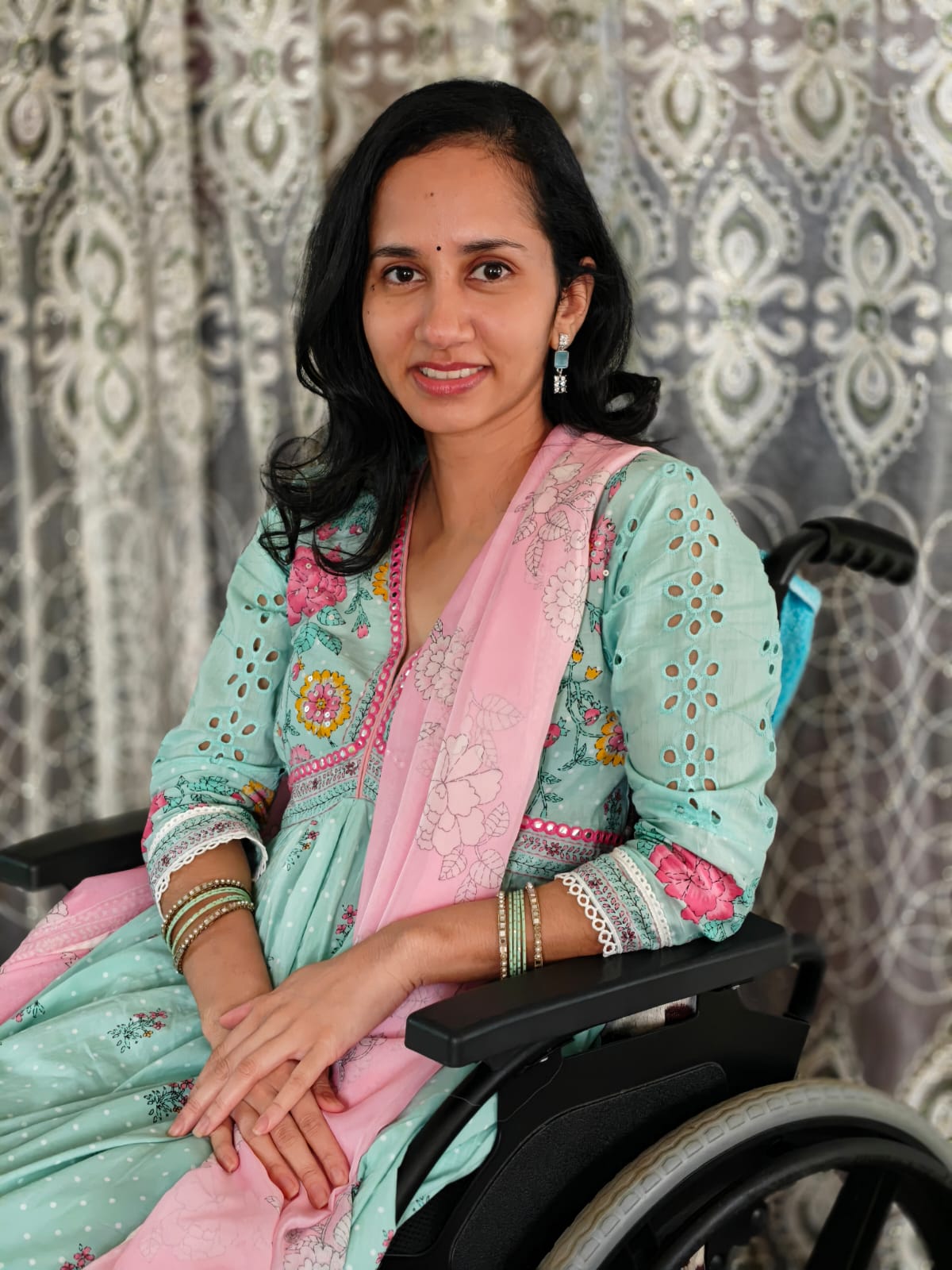
My name is Bindya. I have been paraplegic for about 15 years, and I have been in the workplace for almost five years now. I live a simple life with its share of challenges, but I try to make the most of every moment. Over the years I have learned to adapt, stay positive, and focus on the things that bring me joy.
How does your disability affect your day-to-day life?
As a paraplegic, my day-to-day life requires more planning than most people might expect. Mobility, accessibility, transportation, and certain physical tasks take extra time or adaptation. It does not stop me from living my life, but it adds layers I constantly must think about.
What are the biggest challenges you face in your daily activities?
Some of the biggest challenges come from inaccessible environments. Things like uneven pathways, lack of ramps, transportation limitations, and spaces not designed with wheelchairs in mind can make simple tasks unexpectedly complicated. Additionally, managing my health and energy levels is a continuous balancing act.
How do you overcome obstacles related to your disability?
I overcome obstacles through preparation, patience, and creative problem-solving. Support also plays a huge role, my family and friends have always been there for me, whether emotionally or practically, and that makes challenges easier to navigate. My workplace has also been supportive in many ways, especially when it comes to understanding accessibility needs and helping create solutions. Having people around who understand and respect my situation makes a big difference.
Do you feel society understands the needs of persons with disabilities?
Not entirely. Many people mean well, but there is still a big gap in understanding the practical, everyday needs of persons with disabilities. A lot of barriers come from assumptions rather than awareness.
What profession or job do you currently have, and how did you choose it?
After finishing my degree in accounting, my career path evolved naturally. I started working at PwC and pursued my ACCA alongside. Over time, I also became involved in disability and inclusion at work, which grew from my own experiences and interest in creating better environments for others.
How does your disability impact your work life, if at all?
It mainly affects logistics such as transportation to the office and accessibility within certain spaces. My work itself is not limited by my disability, but the environment around the work sometimes is.
Have you experienced any barriers or support in the workplace due to your disability?
Like many persons with disabilities, I have experienced some barriers related to accessibility and transportation. At the same time, I have also received support, especially through discussions around accommodations and being included in initiatives.
What accommodations or adjustments have helped you succeed professionally?
Flexible work arrangements, understanding of transportation limitations, and having accessible workspaces make a significant difference. Even small adjustments like ergonomic set-ups or the ability to work from home when needed have a big impact.
What advice would you give to employers about including persons with disabilities in the workforce?
Listen before assuming. Every disability is different, and the best solutions come from open conversations. Prioritize accessibility from the start, be flexible, and focus on ability rather than limitations.
How do you personally define disability?
For me, disability is not about the person; it is about the environment. A disability becomes a barrier when the world is not designed inclusively. With the right environment, tools, and support, most limitations shrink significantly.
What is one thing you wish more people understood about living with a disability?
That it is not always the physical aspect that is challenging, it is often the external barriers, social assumptions, and lack of accessibility that make things harder than they need to be.
How comfortable are you discussing your disability with others?
I am comfortable when the conversation is respectful and meaningful. I prefer not to be the center of attention, but I do not mind discussing my experience if it helps increase understanding or awareness.
How has your perception of your disability changed over time?
Over time, it has shifted from something I had to constantly manage to something I integrate into my life with more acceptance. I have learned to navigate challenges more confidently and to advocate when necessary.
What role has community or advocacy played in your life?
A significant one. Being involved in workplace disability and inclusion initiatives has allowed me to contribute to positive change. Sharing experiences both mine and others’ has shown me how powerful community voices can be.
How effective do you find current government policies related to persons with disabilities?
There are some areas where the government has been supportive, especially in terms of schooling assistance and certain financial aid measures. It is also positive that the government is currently reviewing how people with disabilities are compensated, with the goal of making the system fairer and just.
What improvements would you like to see in the disability sector and services?
One of the biggest gaps in Mauritius is the lack of a comprehensive Disability Bill. Without strong legislation, accessibility and inclusion remain inconsistent. More needs to be done, not just in terms of infrastructure but also in empowerment, helping persons with disabilities gain independence, skills, and opportunities. There should be clearer policies, better enforcement, and more programs focused on long-term empowerment rather than short-term assistance. We need a system that supports dignity, autonomy, and real participation in society.
Are there any programs or initiatives that have made a positive impact on your life?
Yes. During my O Level and A Level years, I had access to supply teachers who allowed me to study from home, which made a huge difference in my education. At university, I also received financial support for transportation, which helped me attend classes more independently. These supports gave me more independence than I ever imagined at that time, and they show how the right initiatives can meaningfully empower someone.
What should governments prioritize to better support the disabled community?
Accessible transportation, inclusive infrastructure, financial support for assistive equipment, and stronger anti-discrimination policies. Practical accessibility should be treated as a basic requirement, not an afterthought.
How do you think society can promote inclusion and accessibility more effectively?
By normalizing disability, designing spaces inclusively from the start, and promoting awareness based on real experiences rather than assumptions. Inclusion is not a special project; it is a mindset that should be part of everyday life.
Your message to persons with disabilities.
Living with a disability is not easy, and the challenges can feel heavy at times. But despite that, we keep finding ways to move forward, adapt, and make space for moments of joy. To everyone with a disability, you are doing your best, and that is enough.