

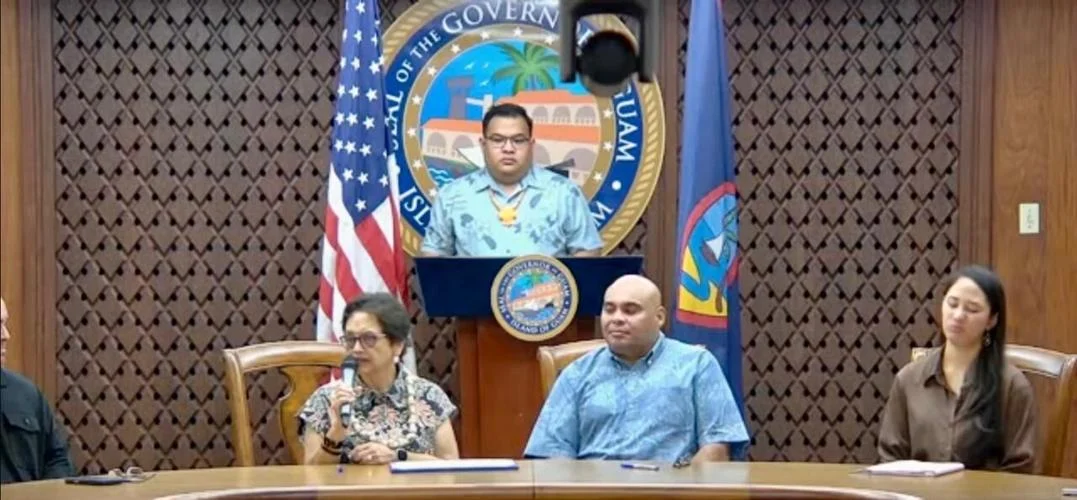
Government leaders and Guam Department of Education officials on Friday celebrated more than 50 years of the Individuals with Disabilities Education Act, IDEA.
The IDEA, they said, is a key law for civil rights, education, and long-term support for students with disabilities.
Gov. Lou Leon Guerrero said this recognition reflects one of her administration’s main beliefs.
“Our administration believes that every child deserves an education, no matter their gender, age, race, or learning ability,” the governor said.
Leon Guerrero also said that working with the federal government is important to keep these programs running and thanked teachers for their hard work.
“I know the sacrifices you make, how you keep training, improving how you teach, and spending time helping our students,” she added.
Speaking about funding concerns, the governor promised continued government support.
“We will help in every way we can, especially in these uncertain times. We will work with the Legislature to make sure this program continues because it is necessary,” she said.
‘Landmark law’
Officials said celebrating IDEA’s 50th year shows Guam’s continued promise to support special education, even with limited funding. They aim to expand services for people with disabilities and strengthen partnerships with families, schools, and federal agencies.
“Today, we join the governor and lieutenant governor in honouring 50 years of the Individuals with Disabilities Education Act, a landmark law that has protected students’ rights and improved access to education across the country and in our community,” said Thomas C. Babauta, assistant superintendent of special education at GDOE.
He thanked families, teachers, advocates, and service providers for driving progress.
Over the past 50 years, IDEA has changed special education by ensuring students are included in classrooms, providing individual support, and holding schools accountable for learning outcomes.
“As we move forward, we will keep working to give students better support, involve families and partners, and prepare students for school, work, and independent living,” Babauta said.
Lt. Gov. Joshua Tenorio, whose mother taught special education, said the anniversary reminds everyone of the progress made and the need to protect it.
“In the past, many special education students were kept in separate classrooms. Things have changed, thanks to research and better teaching methods,” he said.
He added that accessibility and service quality remain top government priorities as Guam works to fix gaps in disability support.
“We must not take progress for granted. Today reminds us to continue improving services for all residents, no matter their abilities,” Tenorio said.
‘Obligation that we want to make’
Tenorio also spoke about the need for long-term support.
“Many parents worry about what will happen to their children with disabilities once they grow up or after their parents pass away,” he said. “That is why we are focusing on more housing options.”
He said this milestone is not just a celebration but also a reminder of responsibility.
“This is a duty we have as Guamanians and part of our moral values. It is an obligation we willingly take,” he said.
He also mentioned how technology can help improve disability services.
“Technology keeps changing, there is even AI now. While I am a bit cautious, I can see how new technology helps deliver services faster,” he added.
Evita Laguana, special education coordinator, read a proclamation reminding everyone that IDEA, passed in 1975, guarantees all children with disabilities the right to a free education in the least restrictive environment.
Long-standing gaps
This celebration comes as GDOE still faces challenges in accessibility and student services.
At a town hall in April 2025, deaf students, parents, and teachers raised concerns about ongoing issues such as the lack of interpreters and personal aides.
Officials admitted these problems exist and promised to follow up.
More accessibility concerns appeared in August 2025, when a lawsuit over a broken elevator at Southern High School highlighted safety and ADA compliance issues.
The school’s only elevator, used by a student with cerebral palsy, stopped working on August 7. It was repaired but still needed inspection and a permit to be used again.
Advocates said many schools and public buildings experience similar safety problems, with around 80% of elevators possibly missing valid permits or safety checks.
Even two years after the Guam ADA Compliance Act of 2023, attorney Daniel Somerfleck from Guam Legal Services Corporation Disability Law Center said GDOE still has not fully put the law into practice.