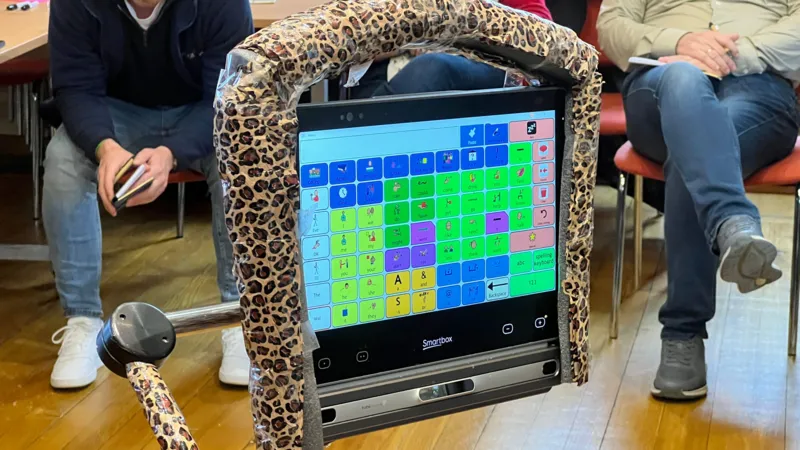


People with disabilities using AAC devices seek greater personalization, versatility, and battery life for all-day use without charging. They desire features like eye-gaze control for tasks such as running a bath or designing adapted rides, alongside faster operation to match conversational speeds. AI advancements offer promise through typing corrections, acronyms, voice cloning for authentic personalization, and even music performance aids like guitar playing and singing translation.