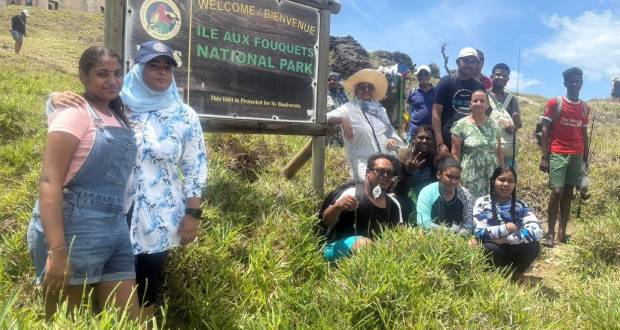
“The Youth With Disabilities Empowerment Platform was born from a revealing observation of the limitations of the Mauritian system when it comes to disability,” explains Ferozia Hosaneea, founding member of the organization. While legal frameworks and public policies advocate inclusion, their concrete implementation remains largely insufficient. After leaving schools that are still mostly specialized, many young people with disabilities find themselves without real support toward autonomy, employment, or social participation — a persistent gap between institutional commitments and lived reality.
Having been involved in the field of disability for more than thirty years, Ferozia Hosaneea has been personally confronted with this reality through her sister’s experience as a person with a disability. It was in this context that YWDEP came into being, with the ambition to provide concrete solutions where the system shows its limits and to address a structural shortcoming.
Beyond training, the organization focuses on building genuine pathways to inclusion. Some young people have managed to join the private sector and, for the first time, access formal employment. When they leave the NGO, they do so with practical skills, renewed self-confidence, and the certainty that they have a rightful place in society.
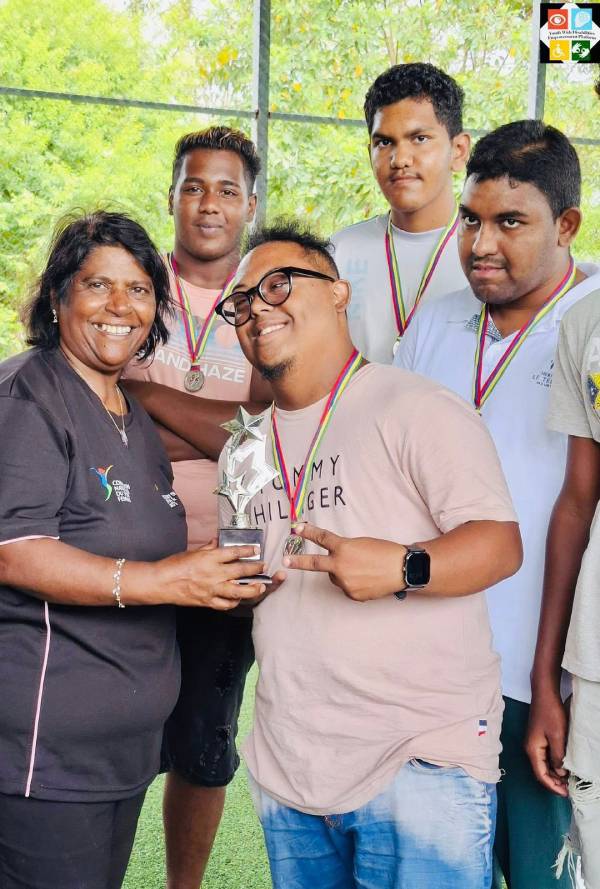
The primary mission of YWDEP is to promote inclusion, rights, and the social, economic, and human empowerment of young people with disabilities. In Mauritius, many complete their education without suitable professional skills, without employment support, and without real recognition of their rights. The absence of transitional mechanisms toward autonomy often forces families to indefinitely shoulder responsibility for their now-adult children. This situation grows even more worrying as parents age, burdened by anxiety about their children’s future.
YWDEP intervenes precisely at this crucial stage, offering an alternative founded on human rights and autonomy. The organization supports young people in developing both functional and economic independence, while giving families renewed hope grounded in dignity and rights.
In practical terms, the NGO aims to create a structured space where young people can develop autonomy, practical skills, and employability. A variety of workshops are offered, eco-bag making, crafts, cooking, gardening, computing, and entrepreneurship, giving each participant the freedom to choose the specialty that best fits their interests and talents. Nothing is imposed; every young person is regarded as an adult capable of making their own decisions.
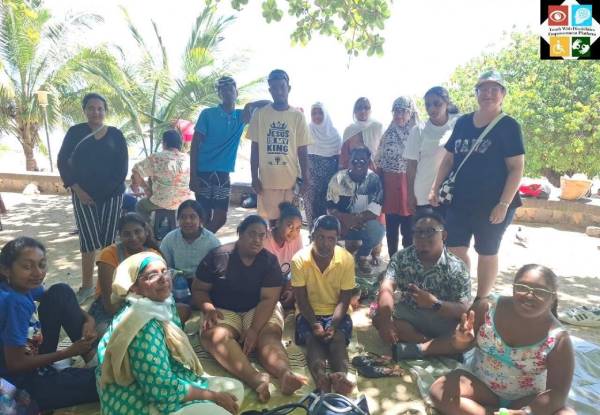
YWDEP also collaborates with private-sector partners, offering young people opportunities to exhibit and sell their products. All income generated goes directly to them, strengthening their economic independence and social inclusion. This approach turns them into active participants in economic life, while also showcasing their skills and preserving their dignity.
Questions to… Ferozia Hosaneea:
“Persons with disabilities are not objects of charity but full-fledged citizens.”
What are the main obstacles faced by these young people, and how does YWDEP address them?
Young people with disabilities experience multiple obstacles: lack of basic skills, low employability, social stigma, unawareness of their rights, and the absence of suitable structures after schooling. Too often, existing rights struggle to translate into concrete practices.
YWDEP responds to these challenges through practical training adapted to each person’s abilities, continuous human support, and an environment that values skills rather than limitations. Since last year, for example, the young participants expressed a need to learn counting in order to manage the sale of their own products. In response, one hour every day is now dedicated to teaching basic mathematics, strengthening both their financial autonomy and self-confidence.
At the same time, the NGO carries out extensive advocacy and awareness work to deconstruct prejudices and promote a model based on human rights. This holistic approach allows young people to regain confidence and gradually integrate into social and economic life.
What are the long-term priorities and development prospects?
It is time for persons with disabilities to stop being seen as objects of charity and to be fully recognized as citizens in their own right. YWDEP’s main priority is therefore to strengthen inclusion, rights, and the economic and social autonomy of young people, particularly by expanding its existing workshops.
In the longer term, the organization aims to consolidate its role as a platform for transition and inclusion, while reinforcing its advocacy at both national and international levels. Since obtaining consultative status with the United Nations Economic and Social Council (ECOSOC) in 2023, YWDEP has been integrating best practices from international experiences and representing the voices of Mauritian youth in global forums. The ultimate goal remains lasting inclusion, where young people become fully autonomous, economically active, and socially recognized.
Why the name “Youth With Disabilities Empowerment Platform”?
The expression Youth With Disabilities highlights the group supported by the NGO, recognizing both their needs and their potential without reducing them to their disabilities. It affirms their identity as full citizens.
The term empowerment reflects the organization’s commitment to strengthening the young people’s autonomy, confidence, and decision-making power, rather than seeing them as mere recipients of charity, in line with the principles of the Convention on the Rights of Persons with Disabilities.
Finally, the word platform conveys YWDEP’s vision: more than just a training center, the NGO aims to be a space for transition, expression, and active participation, where each young person can choose their own path and become an agent of their own journey.