
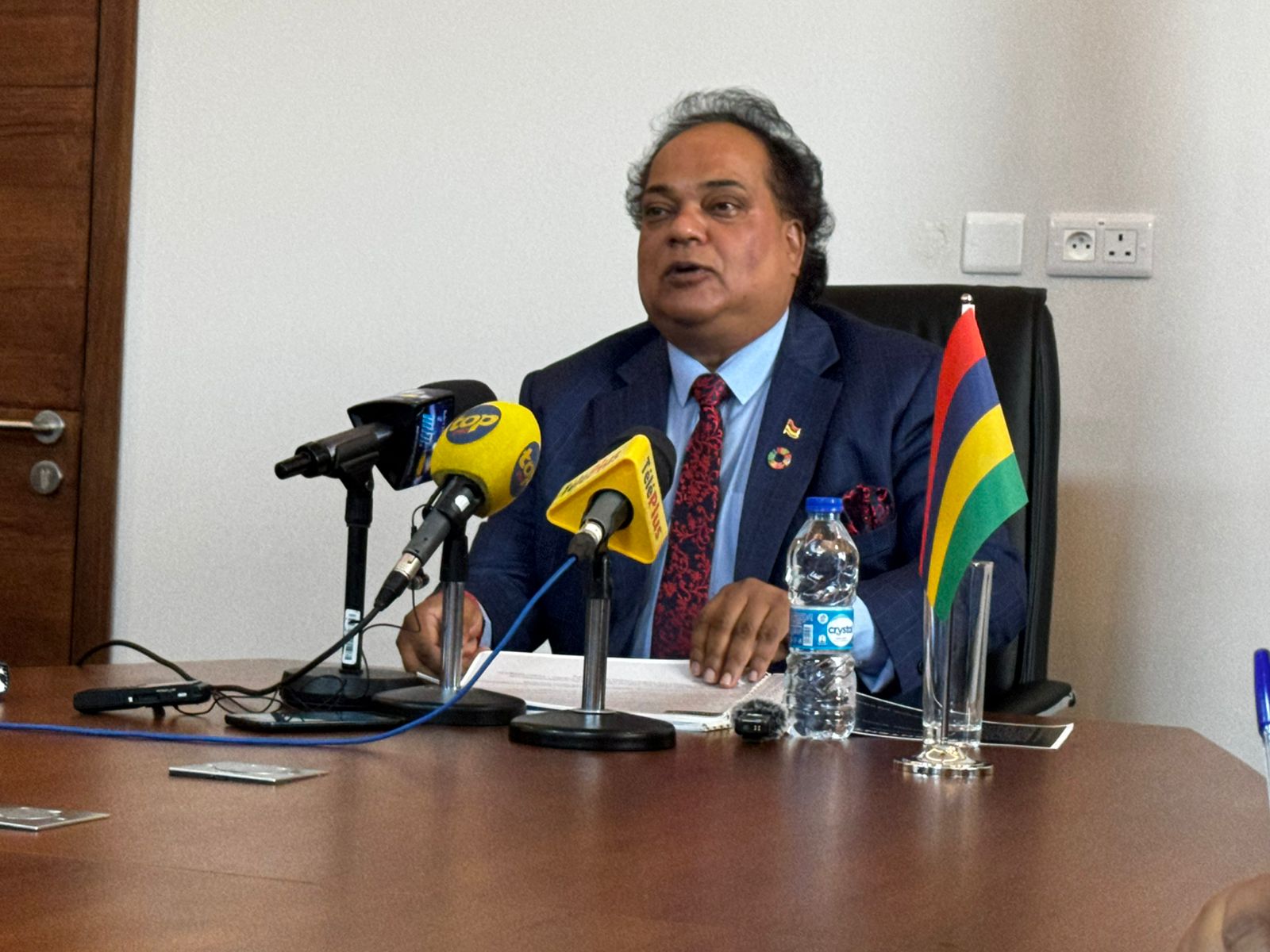
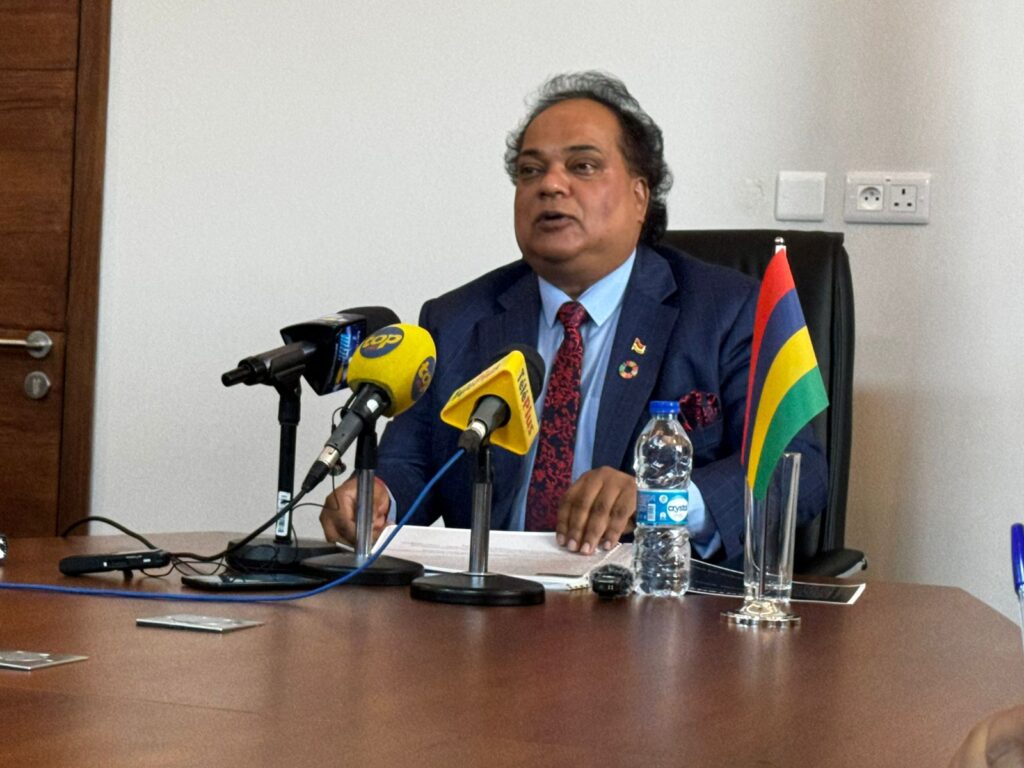
The Minister of Tertiary Education, Science and Research, Dr. Kaviraj Sharma Sukon, highlighted the significant progress made by his Ministry over the past year during a press conference held in Ebène on Monday 15 December 2025. Describing the previous twelve months as a turning point, he stated that the period had been transformative for the higher education, science, and research landscape of Mauritius.
The Minister underscored that the local higher education sector had achieved remarkable success in enhancing Mauritius’s international reputation. Notably, the country now leads Sub-Saharan Africa in innovation rankings. Within the region, Mauritius also took first place in the innovation challenge organized by the Mauritius Research and Innovation Council. Additionally, in the 2025 Global Innovation Index, the nation advanced two positions to 53rd worldwide and placed sixth among upper middle-income economies.
On academic excellence, Dr. Sukon celebrated several scholarly accomplishments, including the publication of two new books by the University of Technology. He also expressed pride in the recognition of two Mauritian researchers among the top 2% of scientists globally.
Reaffirming government’s dedication to inclusive education, the Minister revealed that more than 35,000 students are currently studying in public higher education institutions. Under the Free Tertiary Education Scheme, which benefits 51,289 learners, around Rs 3.7 billion had been allocated by June 2025. He also noted that roughly 7,000 students graduated this year.
To broaden access to university education, Dr. Sukon reminded that a new admission route was introduced, whereby students qualifying with three credits at School Certificate level and two A-levels can now be eligible for university entry.
Discussing institutional reforms, the Minister announced that extensive amendments to the Higher Education Act were successfully completed. These updates aim to modernize the regulatory environment and reinforce Mauritius’s position as a regional hub for higher learning. The reforms include flexible credit systems, formal recognition of micro-credentials, a shift toward institutional accreditation, and the legal incorporation of the Mauritius Quality Code for Higher Education.
Among other headline initiatives, Dr. Sukon mentioned the formulation of a ten-year strategic vision for higher education, science, and research; the release of the first ever official AI usage guidelines in higher education—making Mauritius a pioneer in Africa in that regard; the revision of nine provisions in the Higher Education Act; and new partnerships with UK’s Quality Assurance Agency (QAA) and France’s Hcéres. These collaborations, he noted, further establish Mauritius as a regional gateway to British and French education.
Answering to the questions from the press, Handicap Universel through its editor Mohammad Yaaseen Edoo asked the Minister questions pertaining to disability below:
What measures has the ministry implemented to ensure all tertiary institutions are accessible to students with disabilities (ramps, lifts, signage, accessible toilet, etc.)?
Efforts are being made across all universities, including the University of Mauritius, which has existed before the country’s independence, to ensure their campuses and systems are inclusive and accessible. Current construction projects are being carefully designed to be disability‑friendly and to accommodate the needs of persons with disabilities.
More importantly, we are developing a Learning Management System (LMS) that will be fully adapted to serve students with different types of disabilities. In the past, accommodating learners with varying needs posed challenges due to the wide range of resources required. However, with advancements in Artificial Intelligence (AI) and the integration of modern LMS platforms, it has become much easier to provide adaptive and inclusive learning experiences.
For instance, the Ministry’s website is already accessible in multiple languages and includes features such as adjustable font sizes and customizable color schemes. Building on this progress, we are committed to ensuring that, by next year, all universities will have their own LMS in place. The rollout is expected after June, as it will be incorporated into the national budget. Moving forward, every university will be required to implement a dedicated LMS to support inclusive education for all.
What is a Learning Management System?
A Learning Management System (LMS) provides an effective platform for delivering online courses in a structured and interactive way. During the COVID-19 pandemic, many institutions relied on a variety of online resources to continue their work. However, an LMS is specifically designed to manage and support online learning efficiently.
An LMS ensures meaningful interaction between students and lecturers, as well as collaboration among students themselves. It also allows lecturers to record lectures and course materials so that students can revisit them later for review and continued learning. By centralizing course content, communication, and assessments, an LMS makes the online learning experience more organized, engaging, and accessible.
Are lecturers and administrative staff receiving regular training on Braille to communicate with students with disabilities such as visually impaired, hearing impaired how do they communicate with them?
I need to confirm the training aspect with the universities responsible. However, when it comes to providing assistance, I can confidently say yes – support is indeed available.
I am aware of two to three cases within the LLB program where students with disabilities successfully completed their courses. Their achievements demonstrate that, with appropriate support, students are fully capable of following and completing their studies effectively.
For other faculties, we need to verify the current measures in place, but exploring ways to offer similar training and support would be an excellent initiative. While training details require confirmation, I can guarantee that assistance is already being provided, as evidenced by the success of students who have completed their courses.
Do they have materials in Braille to allow them follow their courses?
The course does not necessarily need to be in Braille — absolutely not. For instance, offering a complete course solely in Braille is not required. Instead, by using the Learning Management System (LMS), we can adapt the course to meet the needs of each student with a disability. Once the course is uploaded to the LMS, it can be customized for accessibility on a single platform. Students will be able to listen to content, adjust colors, and modify the display according to their preferences and needs.
Will the LMS be a mobile application?
Yes, it will be mobile-friendly as well. For example, the Open University uses Blackboard as its Learning Management System (LMS), and it is also mobile-friendly.
How are students with disabilities included in decision-making processes within universities and the ministry? For instance, in projects such as the LMS initiative, have students been consulted on how they will use the system? Additionally, does the ministry involve students with disabilities or disability rights advocates to ensure that all its projects are accessible and disability-friendly?
I am not going to that extent, but let me explain how this process works in a university setting. For example, at the University of Mauritius (UoM), there are representatives who serve on the Council and the Senate. These positions are filled through elections. Each faculty elects its own representative, and among these representatives, members are then selected to sit on the Council and the Senate.
This ensures that the university operates through a democratic process since representation is determined by voting. The same system applies to the University of Technology, Mauritius (UTM). However, I believe that the voices of students with disabilities deserve special consideration. Their unique perspectives and needs should be properly represented and given particular attention within the university’s decision-making framework.
Maybe like you are saying the faculty and students council can reach out to these students and note their issues and pass the messages in their meetings to ensure they receive maximum support they need.
Of course. The process operates democratically, as I have explained. It begins within each faculty, where members elect their representatives. These elected representatives then go on to choose their own representatives for higher governing bodies such as the Senate and the Council.
Does the ministry have partnerships with NGOs or private organisations to support disability inclusion in tertiary education?
When institutions enter into agreements, the process varies depending on the type of partnership. For example, according to the Memorandum of Understanding (MoU) procedures, any agreement signed between a local institution and an international organization must go through the Cabinet’s approval. However, when an agreement is signed between two local institutions, this step is not required – they can proceed independently.
Many of these institutions already have several agreements with non-governmental organizations (NGOs). These partnerships are often not listed or presented publicly, as doing so would make this press conference excessively long.
For example, the Mauritius Research and Innovation Council (MRIC) operates a program known as the National Incubator Scheme. This initiative supports students who have innovative ideas by connecting them with industry experts who can help transform their ideas into viable businesses. MRIC collaborates with several organizations to facilitate these efforts, including NGOs that contribute to the social aspect of development.
Social integration plays a vital role in this process. Through collaboration with NGOs, students not only develop entrepreneurial skills but also grow personally and socially. MRIC funds several schemes aimed at promoting social development, many of which involve partnerships with NGOs.
Currently, our ministry which was established only a year ago does not have a formal agreement with NGOs. However, we would be very pleased to establish one in the future to strengthen this collaboration and further support innovation and social development.
Does the ministry have disability right activists involve in projects?
We do not go to this extent.
No, activists are here to help the ministry, the government to ensure all the different issues are heard and taken care of.
We can. Our doors are open to building an inclusive society – one that ensures every member of our nation has the opportunity to contribute to the country’s growth and development.